
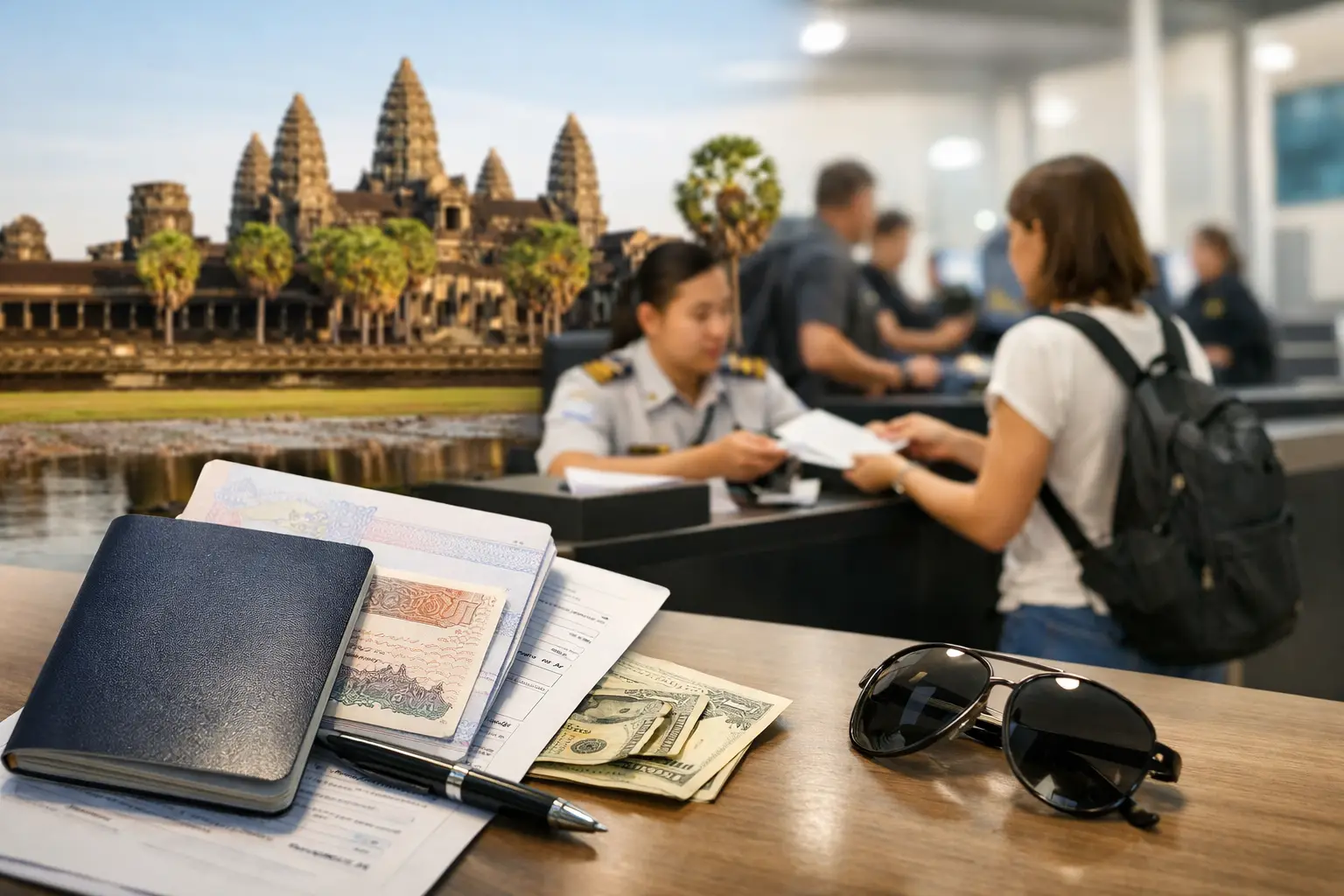
If you are planning a trip and considering a Cambodia visa on arrival, the good news is that the process is usually simple. The catch is that simple does not mean risk-free. Rules can change, airport lines can be slow, and missing one document can turn a quick arrival into a stressful delay.
For most travelers, Cambodia remains one of the easier countries in the region for short-term tourist entry. That said, visa on arrival is not always the best fit. If you want more certainty before you fly, it is worth comparing it with the e-Visa option before making your final decision.
Cambodia visa on arrival basics
A Cambodia visa on arrival is generally available for eligible foreign nationals entering through selected international airports and some land border checkpoints. In most cases, this option is used for tourism and short stays.
Travelers should not assume that every nationality qualifies. Entry conditions depend on your passport, your point of arrival, and current immigration policy. Before departure, confirm whether your nationality is eligible and whether your airport or land crossing is currently issuing visas on arrival.
The visa itself is typically valid for a short tourist stay. You should also make sure your passport has enough validity left, usually at least six months from the date of entry, along with blank visa pages.
What you usually need at arrival
The Cambodia visa on arrival process is straightforward when your documents are ready. In most cases, immigration officers will ask for your passport, a completed arrival or visa form, a passport-style photo, and the visa fee in the accepted currency.
Some travelers are also asked for proof of onward travel, accommodation details, or evidence of sufficient funds. Not every officer asks for every item, but it is smart to carry them anyway. When visa processes are handled at the airport counter, small missing details can cause bigger delays than expected.
Bring printed copies where possible. Even when digital documents are accepted in practice, printed paperwork can save time if internet access is weak or your phone battery is low.
Fees and processing time
Visa on arrival is often processed the same day, usually within minutes to an hour depending on queue volume. At busy arrival times, especially during holiday periods, waiting can take longer.
Fees vary by visa type and policy updates, so you should check the latest amount before travel. Many travelers carry cash to avoid payment problems at the counter. If you arrive without the right currency or exact amount, the process can become slower and more confusing than it needs to be.
This is one of the biggest trade-offs with visa on arrival. It offers flexibility, but you are still relying on airport conditions, staffing, and live verification at the point of entry.
When visa on arrival makes sense
Visa on arrival works well for travelers with flexible plans, confirmed eligibility, and all documents ready in hand. It can also be useful if you booked a last-minute trip and do not have enough time to complete pre-travel visa processing.
Still, convenience depends on your tolerance for uncertainty. If you prefer to land with approvals already handled, an online visa may be the better route. If you are comparing the two, our Cambodia e Visa Guide for Fast Approval can help you decide which option fits your trip better.
Common issues travelers face
The most common problems are not usually major legal issues. They are practical mistakes. Travelers arrive without a passport photo, do not carry cash, misunderstand eligibility, or assume all border points offer the same service.
Another issue is relying on outdated travel advice from forums or social media. Visa information changes faster than many travel posts get updated. A traveler who entered smoothly six months ago may have used a different airport, passport, or entry category than you.
If you are used to online visa systems, airport processing can also feel less predictable. There may be forms to fill out by hand, longer queues than expected, or inconsistent requests for supporting documents.
Is an e-Visa better than Cambodia visa on arrival?
For many travelers, yes. An e-Visa can reduce uncertainty because you complete the main approval step before departure. That usually means less paperwork at the airport and fewer surprises after landing.
Visa on arrival still has value, especially for spontaneous travel. But if your trip includes tight hotel bookings, business meetings, or onward flights, pre-approval can provide more peace of mind. Travelers who like to organize documents in advance often prefer digital processing for exactly that reason.
The same logic applies across many destinations. Small documentation errors can create delays that are easy to avoid with better preparation. If you want a practical checklist mindset, our guide on 10 Best Ways to Avoid Visa Rejection covers the kind of mistakes travelers often overlook.
Before you fly
Check your nationality eligibility, confirm your arrival point supports visa on arrival, prepare cash, print your hotel and return flight details, and carry extra passport photos. Those few steps can save a lot of time after landing.
If your priority is speed with less uncertainty, look at the e-Visa first. If your priority is flexibility and your documents are fully ready, Cambodia visa on arrival can still be a practical option. The best choice is the one that matches how you travel, not just what is technically available.